If you’re thinking about lifting your Jeep, the first question is usually pretty simple: how much is this actually going to cost me?
For a mild setup, you could be looking at less than $1,000 installed. A more complete 2.5- or 3.5-inch suspension lift can easily run from around $1,500 to $4,000, while bigger builds can cost considerably more once you start adding upgraded shocks, suspension parts, wheels, and tires.
The right budget depends on the Jeep you own, how high you want to go, and what you want the finished build to do.
Jeep Lift Costs at a Glance
| Jeep lift setup | Typical 2026 parts cost | Typical installed budget |
|---|---|---|
| 1.5–2″ spacer or mild lift | $100–$500 | $400–$1,000 |
| 2–2.5″ suspension lift | $300–$1,500+ | $800–$3,000 |
| 3–3.5″ suspension lift | $700–$2,000+ | $1,200–$4,000+ |
| 4″+ suspension lift | $1,500–$3,000+ | $2,500–$6,000+ |
| Long-arm or premium build | $2,000–$5,000+ | $4,000–$8,000+ |
Pricing note: These are general 2026 U.S. market ranges to help you budget. They are not Ultimate Rides prices or quotes. Your actual cost will depend on your Jeep, lift height, components, labor, and any extra suspension work your build needs.
You’ll find Jeep lift kits advertised from a couple hundred dollars to well over $1,000 before installation. That’s why we always look at the complete build rather than just the number on the box.
How Much Does a 2-Inch Jeep Lift Cost?
If you want a little more height, a better stance, or room for a modest increase in tire size, a 2-inch lift is usually the cheapest place to start.
A good planning range is around $100–$500 for parts and $400–$1,000 installed. At the lower end, you’re generally looking at a simple spacer or spring setup. More complete suspension packages with upgraded shocks will cost more, but they can give you a better all-round setup than simply adding height.
For a Jeep that spends most of its time on the road, a mild lift may be all you need.
How Much Does a 2.5-Inch Jeep Lift Cost?
A 2- to 2.5-inch suspension lift is a popular middle ground for Wrangler owners. You get a noticeable change in stance and more room for larger tires without immediately moving into a taller, more involved build.
Budget around $300–$1,500+ for parts and roughly $800–$3,000 installed.
There’s a wide price range because a 2.5-inch lift can be anything from a fairly simple spring-and-shock package to a more complete suspension system. If you’re comparing quotes, look at the overall build rather than assuming two lifts of the same height are giving you the same thing.
How Much Does a 3-Inch or 3.5-Inch Jeep Lift Cost?
Once you move into the 3- to 3.5-inch range, things usually get more involved. A sensible planning range is around $700–$2,000+ for parts and $1,200–$4,000+ installed.
At this height, we start paying more attention to suspension geometry, control arms, track bars, shock travel, tire clearance, and how the Jeep is actually going to be used. Not every Jeep needs the same supporting parts, but there are more things to get right once you start going taller.
For many owners, this is also the point where a larger wheel and tire package becomes part of the project.
What About a 4-Inch Jeep Lift?
A 4-inch lift is a bigger build rather than a simple change in ride height. You’re usually talking about larger tires, more suspension travel, and a setup that may need additional supporting suspension components.
A finished 4-inch Jeep lift can easily run $2,500–$6,000 or more, while premium long-arm or heavily modified off-road builds can go higher again.
If you’re already planning 35s, 37s, upgraded shocks, control arms, and a more serious off-road setup, it makes more sense to budget for the whole vehicle rather than treating the lift kit as a standalone purchase.
The Kit Price Is Not the Finished Price
This is probably the biggest thing to remember when working out your Jeep lift cost.
You can buy an $800 lift kit online, but that doesn’t mean you’ll end up with an $800 lifted Jeep. Depending on your Jeep and the height you’re going for, there may be several other costs to consider.
Installation: A basic spacer lift is relatively straightforward, while a full suspension system with multiple replacement components takes considerably more shop time.
Alignment: Suspension work can alter your wheel alignment, so a proper alignment should be part of the finished job rather than an afterthought.
Shocks: Some kits include them and some don’t. Upgrading the shocks can also make a big difference to how the Jeep rides and handles after the lift.
Control arms: Taller lifts may benefit from adjustable or replacement control arms to help get suspension geometry and axle positioning where they need to be.
Track bars: Depending on the height and setup, an upgraded or adjustable track bar may be needed to keep the axle properly centered.
Brake-line and suspension hardware: Taller setups can require extensions, brackets, bump stops, or other smaller components that are easy to overlook when you first price the kit.
Wheels: Your existing wheels may not give you the fitment or clearance you want once you move to a larger tire.
Tires: Larger tires are one of the main reasons people lift Wranglers in the first place, and a complete set can add a sizable amount to the overall project.
So when you’re comparing Jeep lift costs, compare the finished setup, not just the price of the suspension kit.
Does the Jeep Model Affect Lift Cost?
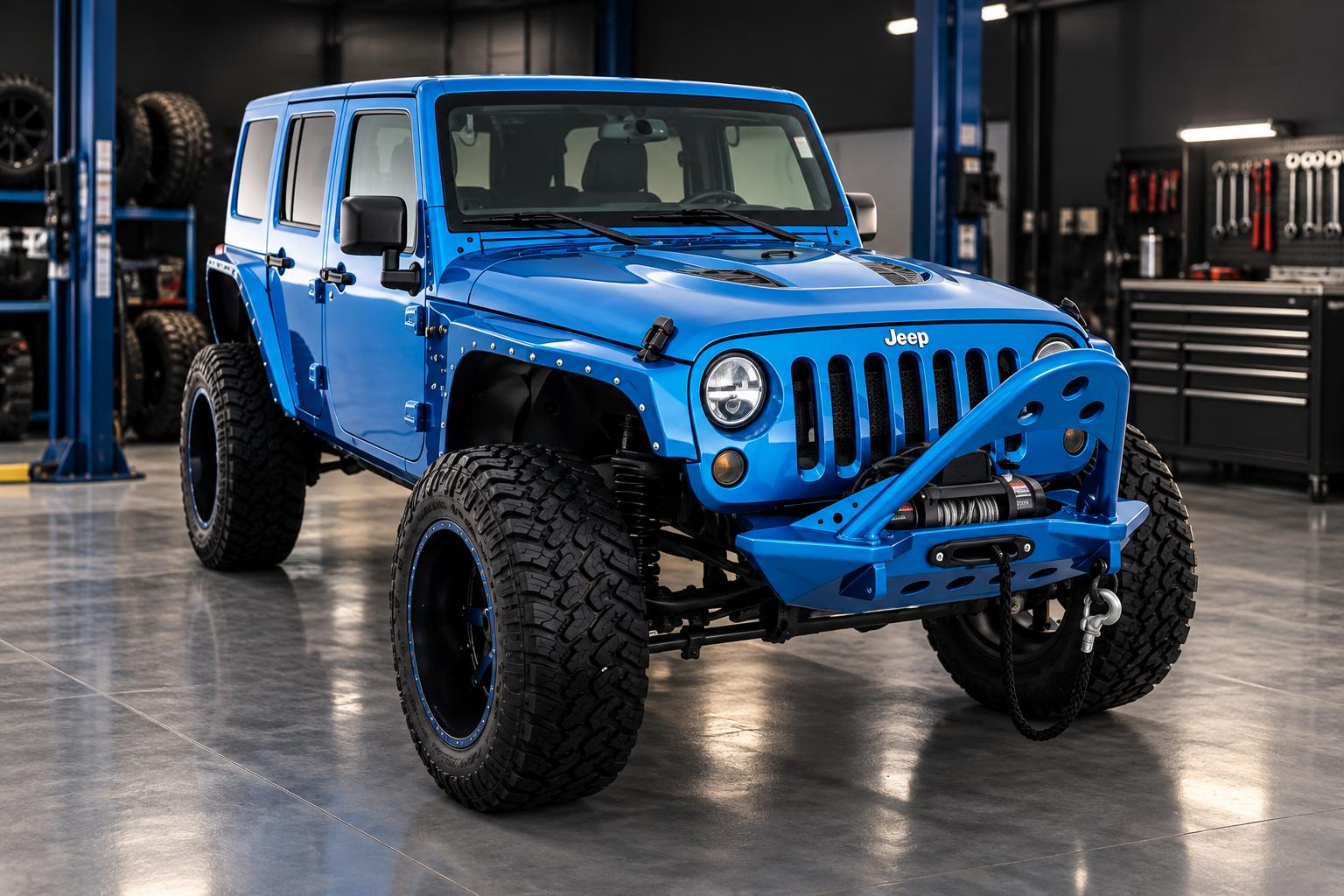
Yes. A TJ, JK, JL, and Gladiator can all be lifted, but the choice of parts and typical cost are not identical.
Jeep Wrangler TJ
The TJ has been around long enough that there is a huge aftermarket, with options at just about every price point. That can make a mild TJ lift relatively affordable, particularly if you’re staying in the 2- to 3-inch range.
Age is the other side of the equation. If an older TJ already has worn bushings, shocks, steering parts, or suspension components, those may need attention while the Jeep is apart. A cheap lift kit doesn’t always mean a cheap finished build.
Jeep Wrangler JK
The JK also has an enormous aftermarket, which gives you plenty of choice between entry-level, mid-range, and premium setups.
For a straightforward 2- to 3.5-inch build, the JK is generally easy to price because there are so many established combinations available. Once you start going taller or adding larger tires, the overall budget can increase as more suspension and fitment work comes into play.
Jeep Wrangler JL
The JL is a newer platform, and good-quality suspension systems can be more expensive than comparable older Wrangler setups.
There is still plenty of choice, but JL owners are often looking at more complete packages rather than simply adding height. That can mean upgraded shocks, control arms, track-bar components, and other suspension parts being included in the project from the start.
If you’re comparing the cost of modifying the Wrangler you already own with buying one that’s already been built, take a look at our lifted Jeep Wranglers for sale.
Jeep Gladiator JT
The Gladiator shares plenty with the JL, but it shouldn’t simply be treated as a Wrangler with a bed.
Its longer wheelbase, pickup layout, and rear suspension requirements mean you need a Gladiator-specific setup. Entry-level costs can be similar to a JL, while more complete Gladiator suspension systems can get expensive fairly quickly.
We work with platform-specific setups across Wrangler and Gladiator builds. You can see more about the kind of work we do on our custom truck builds page.
Whatever Jeep you have, the best starting point is the exact year, model, trim, intended tire size, and what you actually want the vehicle to do.
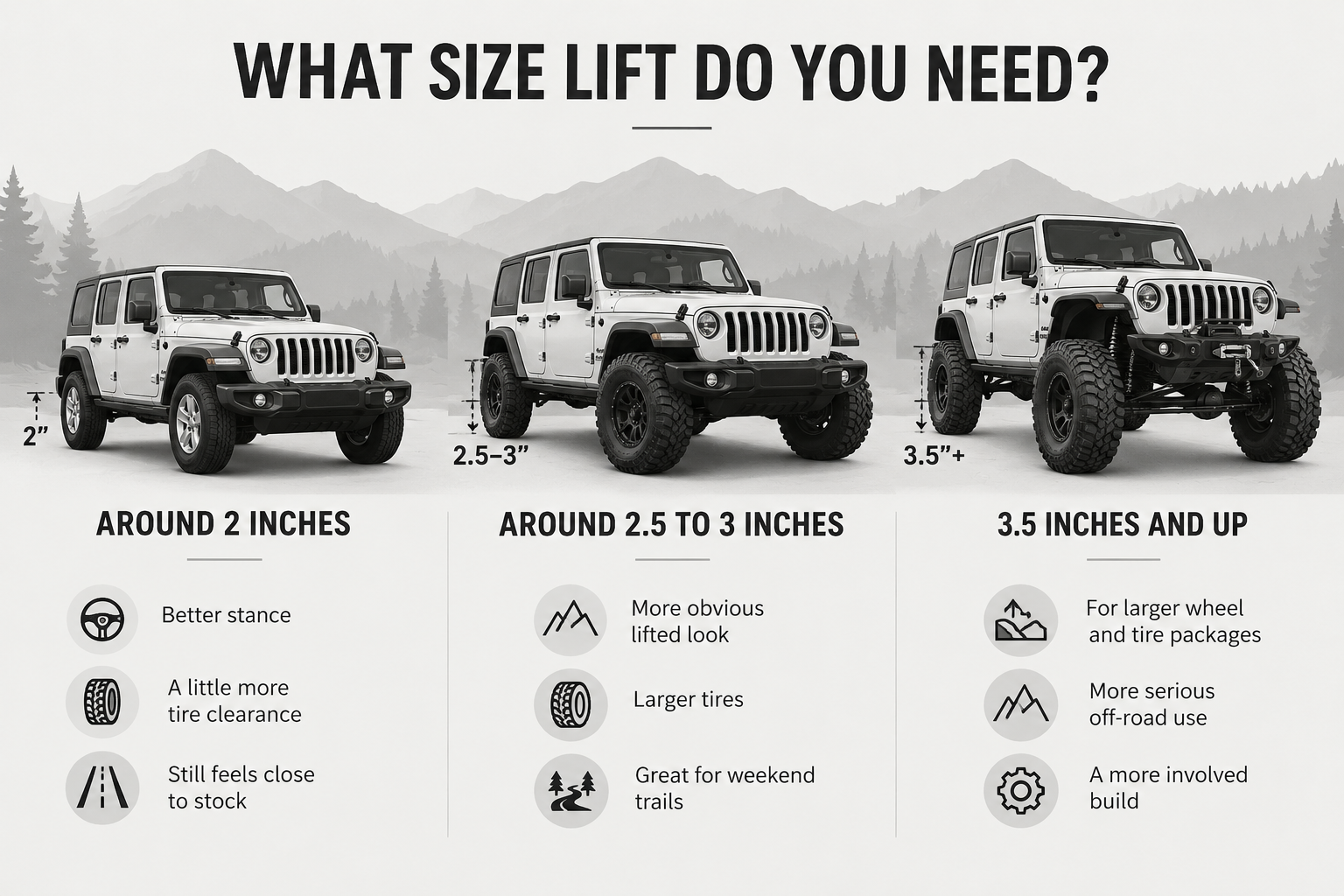
What Size Lift Do You Need?
There isn’t one right answer. The best lift height depends on how you use your Jeep and what you want it to look like.
Around 2 Inches
A mild lift works well if you want a better stance, a little more tire clearance, and a Jeep that still feels fairly close to stock.
Around 2.5 to 3 Inches
This is a good middle ground if you want a more obvious lifted look, larger tires, some weekend trail use, and extra clearance without going straight into a big build.
3.5 Inches and Up
Taller lifts make more sense for larger wheel and tire packages, more serious off-road use, and owners who are prepared for a more involved suspension build.
The height should follow the build, not the other way around.
Do You Actually Need a Full Lift?
Maybe not.
If your main goal is to reduce the factory rake, raise the front slightly, or make room for a modest tire upgrade, a leveling kit can be a cheaper and simpler option than a full suspension lift.
A leveling kit won’t give you the same increase in overall height or suspension travel, but for some daily-driven Jeeps, that may be all you need.
Take a look at our leveling kit installation guide if you’re not sure whether you need a full lift.
Don’t Forget the Wheels and Tires
A lot of people lift a Jeep because they want to run a bigger tire, so the suspension itself may only be part of the final budget.
Wheel width, offset, backspacing, tire diameter, and lift height all need to work together. Get that combination wrong and you can end up with rubbing, poor clearance, or a wheel and tire package that simply doesn’t suit the rest of the build.
We can also handle the lift, wheel and tire fitment, mounting, balancing, and alignment here in-house. That makes it easier to build the whole setup around the Jeep rather than trying to make separately purchased parts work together afterwards.
Is It Worth Lifting an Older Jeep?
It can be, particularly if you’re starting with a solid Wrangler.
Older Jeeps make great modification platforms because there is so much choice when it comes to suspension, wheels, tires, and off-road upgrades. What matters most is the condition of the Jeep underneath it all.
If the frame, steering, suspension, and driveline are in good shape, a lift can completely change how the Jeep looks and what it can do. If it already needs a lot of mechanical work, we’d rather deal with that first than build a new suspension setup on top of worn components.
If you’d prefer to skip the build altogether, you can also browse our full range of lifted Jeeps for sale and start with something that has already been put together.
DIY vs Professional Jeep Lift Installation
Installing a simple lift yourself can save money if you have the tools, space, and experience. The more involved the build becomes, though, the less it is about simply bolting on a set of parts.
Suspension geometry, steering, torque settings, tire clearance, and alignment all need to work together. Professional installation also gives us a chance to spot worn components while the Jeep is apart rather than discovering them once the new suspension is already fitted.
That becomes increasingly important as lift height and tire size go up.
Want Us to Lift Your Jeep?
If you already know the look you want, bring us the Jeep and let’s talk through it.
We lift more than 500 vehicles a year here at Ultimate Rides and handle the work in-house. We can take care of the lift, wheels, tires, fitment, and alignment so you’re not trying to piece the build together between different shops.
We’ve also got our own Hunter alignment rack, so we can get everything lined up properly once the suspension and wheel setup is finished.
Visit our Lift Shop and tell us what Jeep you have, how high you want to go, and what you want the finished build to look like.
Jeep Lift Cost FAQs
How much does a 2-inch lift cost for a Jeep?
A 2-inch Jeep lift can cost around $100–$500 for parts, while a professionally installed setup may come in around $400–$1,000. The final price depends on whether you’re using a simple spacer setup or a more complete suspension package.
How much does a 3-inch lift cost for a Jeep?
A 3- to 3.5-inch Jeep lift generally costs more because the suspension setup becomes more involved. A useful planning range is around $700–$2,000+ for parts and roughly $1,200–$4,000+ installed.
How much does it cost to lift a Jeep Wrangler?
For a mild professionally installed Wrangler lift, roughly $800–$3,000 is a reasonable planning range. Taller or more complete builds can run from $3,000 to $6,000 or more depending on the suspension, supporting parts, wheels, and tires.
These are general market estimates rather than Ultimate Rides quotes.
How much does Jeep lift kit installation cost?
Labor depends on your Jeep and the kit being installed. A simple spacer setup takes less work than a full suspension system with shocks, control arms, track bars, and other supporting parts.
For that reason, it makes more sense to compare complete installed prices rather than just asking what a shop charges for labor.
Do I need an alignment after lifting my Jeep?
Yes, you should plan on checking and correcting the alignment after suspension work. A lift can change suspension and steering geometry, which can affect handling and tire wear.
We handle alignment in-house after installation.
Do I need new tires after lifting my Jeep?
No. You can lift a Jeep and keep the existing tires if the setup allows it.
A lot of owners do eventually go bigger, though, because extra tire clearance is one of the main reasons for lifting a Wrangler in the first place.
Does a taller Jeep lift need extra suspension parts?
It can. As lift height increases, additional suspension components may be needed to keep the geometry, axle position, steering, and shock travel where they should be.
That’s one reason a 4-inch lift can cost considerably more than simply twice the price of a 2-inch lift.