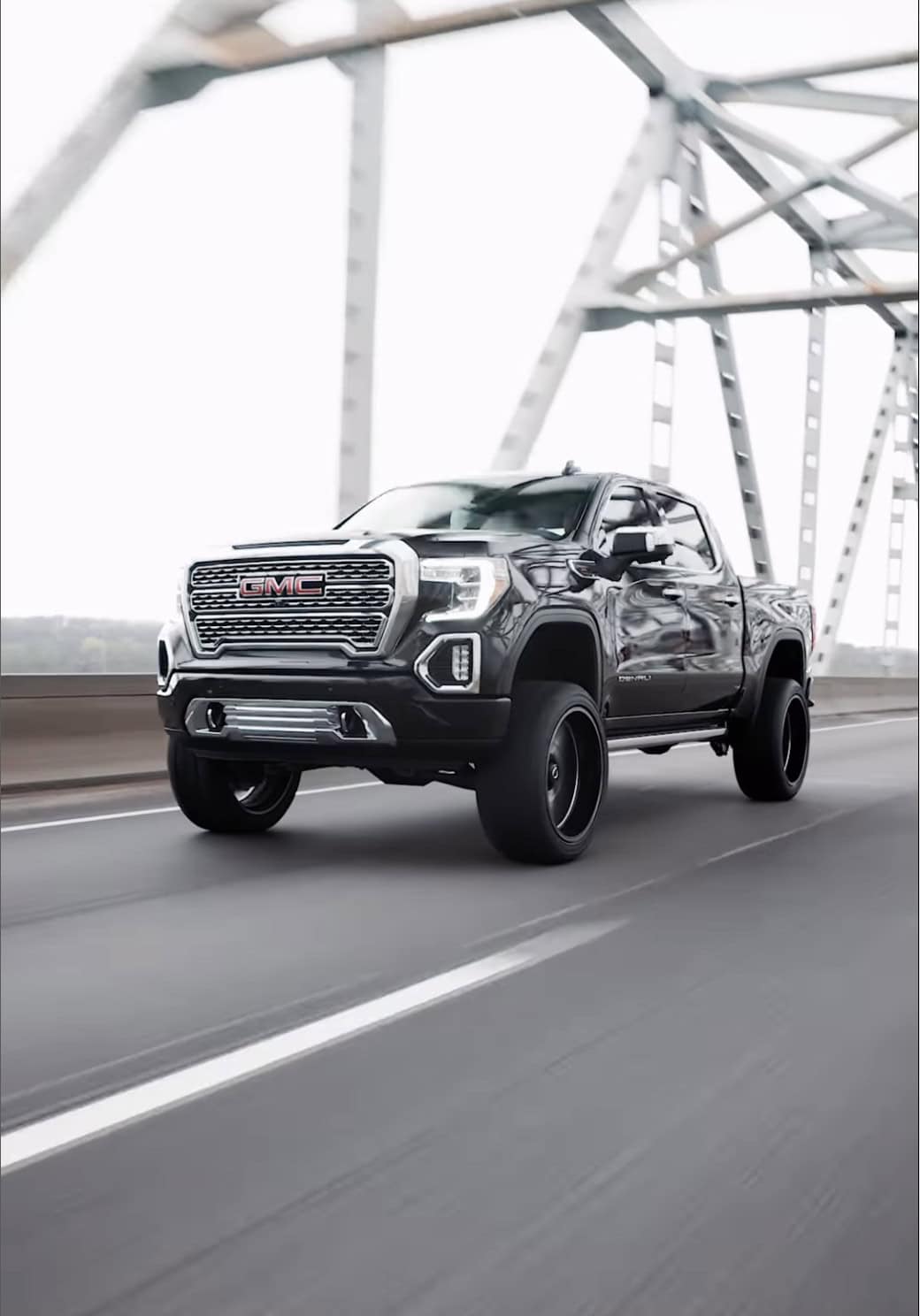
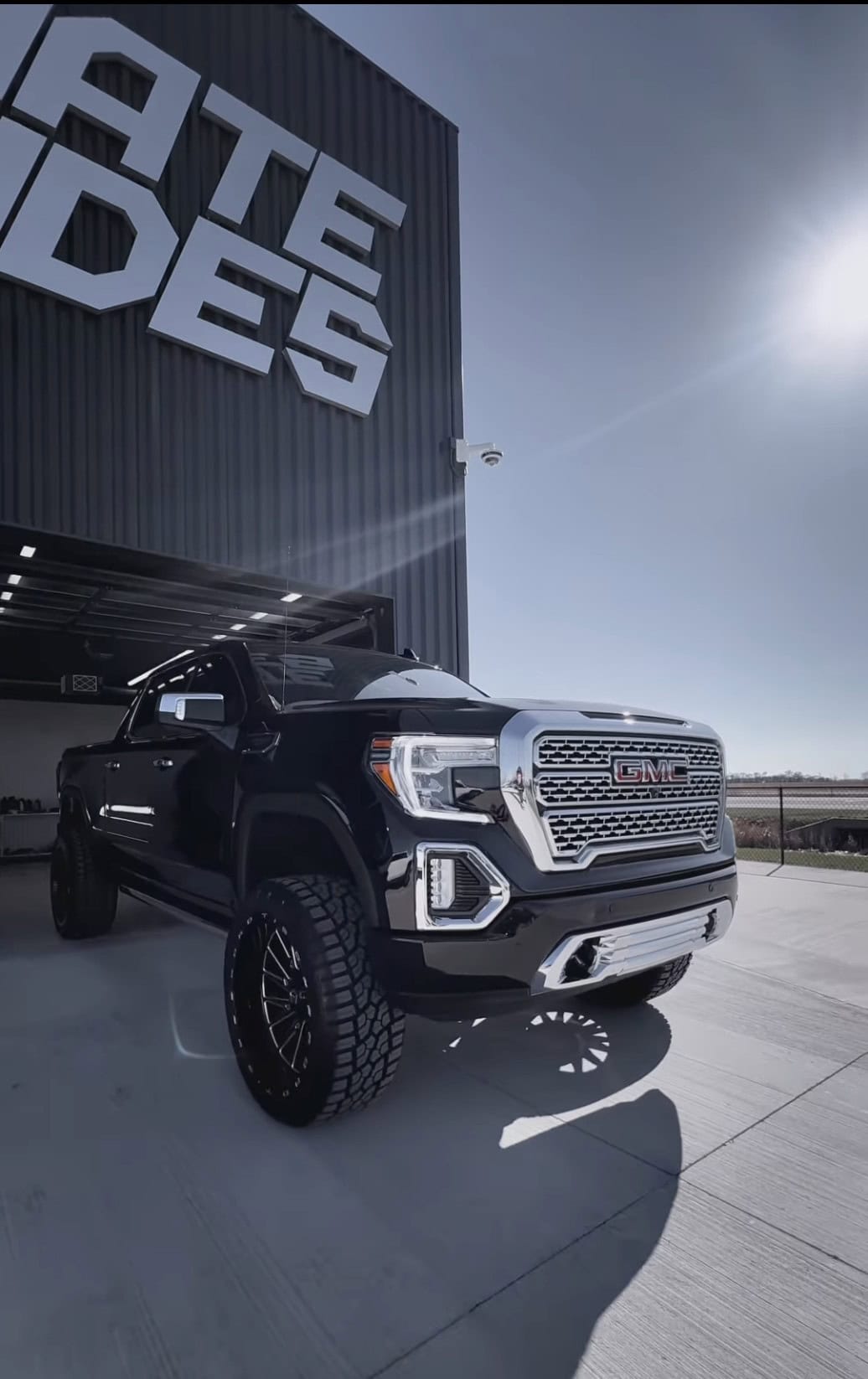
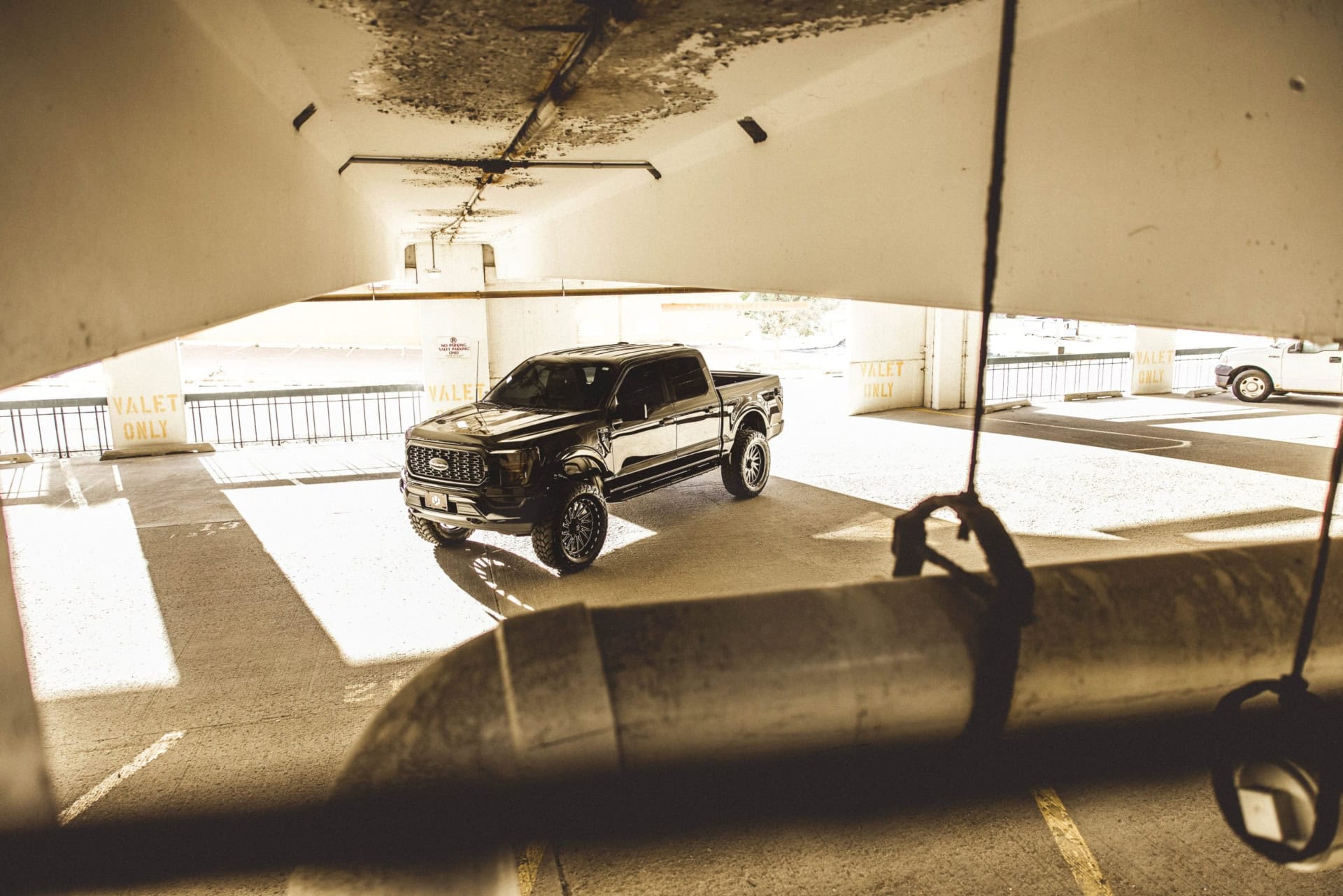
You’re looking at your stock truck and thinking it needs more clearance, bigger tires, or just a meaner stance. A lift kit will get you there, but with dozens of brands and options, where do you even start?
The right lift kit transforms how your truck performs off-road and looks on the street. The wrong one wastes money, rides rough, and might not even fit the tires you want. Choosing between leveling kits, suspension lifts, body lifts, and coilovers gets confusing fast when every brand claims it’s the best.
We’ll break down the best truck lift kits on the market, explain the difference between 4h and 4l when you’re actually using that lift off-road, cover what to consider before buying, and give you a clear framework for picking the right kit for your truck and how you use it.
Why Lift Kits Matter
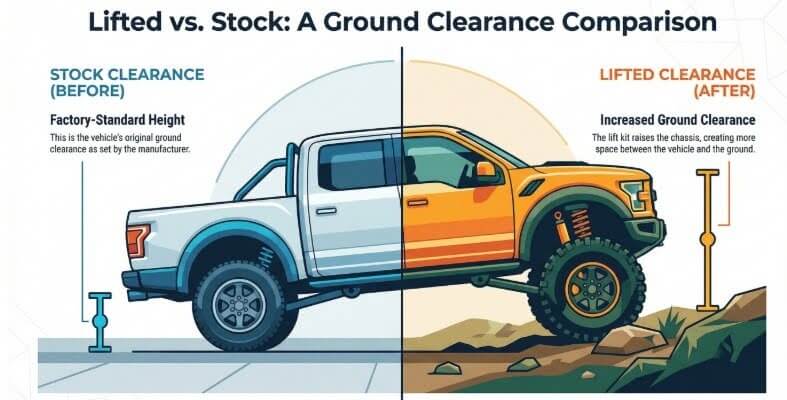
Look, plenty of people will tell you lift kits are all about making your truck look mean. That’s part of it, sure – a lifted truck definitely turns heads. But the real value shows up when you’re actually using your truck.
More clearance means you can drive over obstacles that would stop a stock truck – rocks, ruts, deep mud, whatever. Your frame stays off the ground, avoiding scraping and dents. You get room for bigger tires, which gives you better traction and more contact patch when you need it.
Off-road, more suspension travel means your tires stay planted on uneven ground instead of hanging in the air. Better articulation keeps all four wheels working when the trail gets technical. Most trucks also sit nose-low from the factory to accommodate payload. A lift fixes that rake and gives you better visibility down the road.
The real trick is matching your lift to how you actually use the truck. Daily driver that sees some forest service roads? That’s different from someone rock crawling every weekend.
Key Factors to Consider Before Choosing a Lift Kit
Before you start comparing brands and lift heights, think through what you actually need.
Your Vehicle’s Factory Specs
Different trucks have different factory suspension designs. IFS (independent front suspension) trucks, like most modern half-tons, lift differently than solid axle trucks. Your factory suspension components, frame design, and existing setup all affect what lift options work best and how they’ll perform.
Intended Use Scenario
Are you lifting your truck for daily driving with occasional trail use? Weekend off-roading on moderate trails? Serious rock crawling? Show truck looks? Each scenario points toward different lift heights and kit types.
A 2-inch level might be perfect for the daily driver who wants to fit 33s, while a serious off-roader might want a 6-inch suspension lift with upgraded shocks.
Desired Tire Size
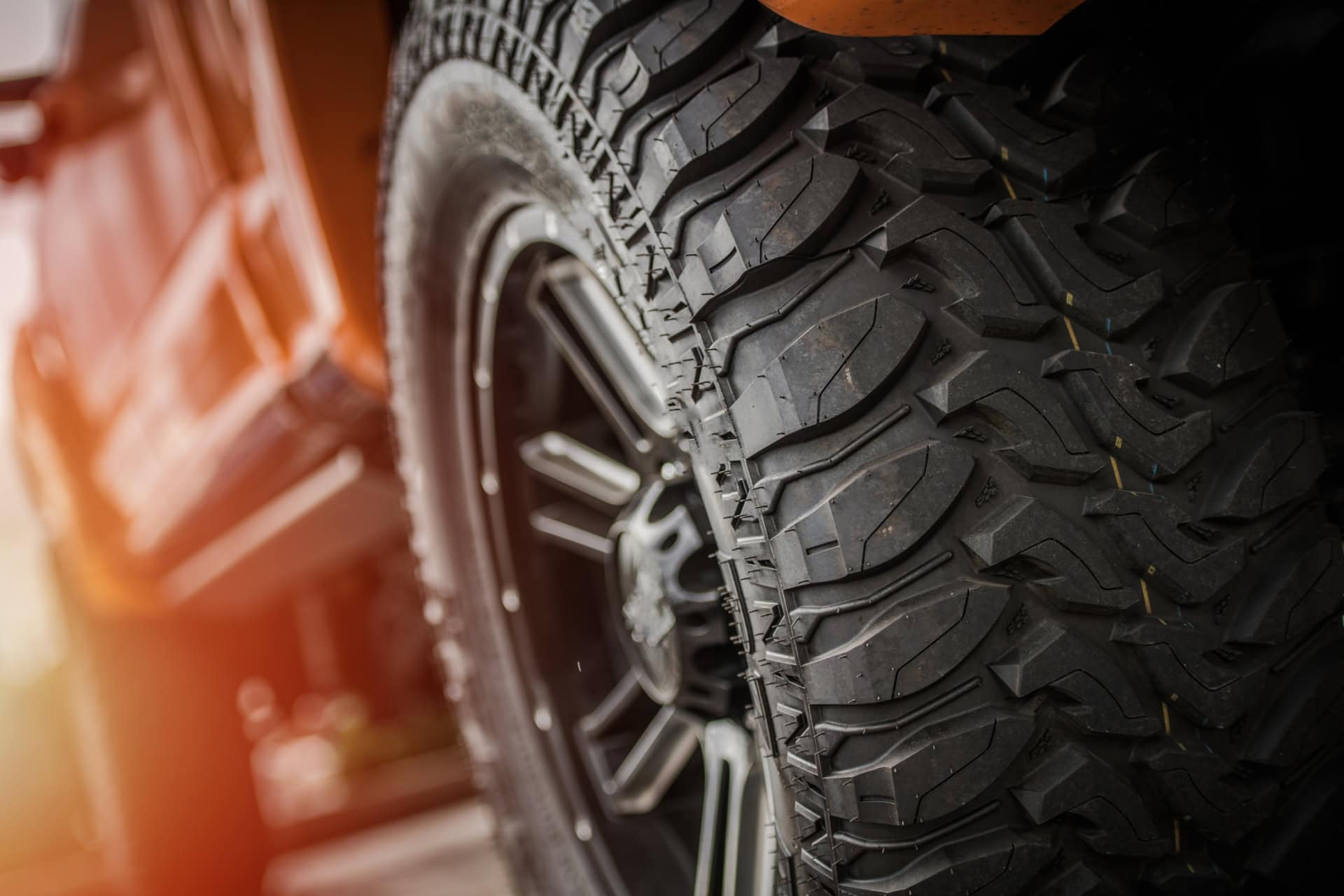
Know what tire size you want before choosing a lift. Bigger tires look great but add weight, change your gearing, affect acceleration and braking, and increase fuel consumption. Match your lift height to the tires you plan to run, not the other way around.
Budget and Hidden Costs
Factor in professional installation unless you have the tools and know-how for a DIY install. You might need upgraded shocks, new wheels with a different offset, an alignment, and potentially even gear ratio changes for very large tires. Hidden costs add up fast. Quality kits cost more upfront but typically ride better and last longer.
Drivability and Ride Quality
Some lifted trucks ride rough on the highway. Others maintain surprisingly good on-road manners. If you’re daily driving your truck, ride quality should factor into your decision. Premium kits with quality shocks and better engineering generally drive better than budget options, though budget kits have improved significantly in recent years.
More lift isn’t always better. Extreme lift heights can affect handling, put stress on drivetrain components, and make highway driving less pleasant. Match your lift to your actual needs rather than just going as high as possible.
Types of Lift Kits Explained
Different lift kit types work in different ways and serve different purposes. Here’s what you need to know about each.
Quick Comparison: Types of Lift Kits
Leveling Kits
Leveling kits are the simplest option. Most trucks sit lower in the front than the rear from the factory (to accommodate payload and towing).
A leveling kit raises just the front to match the rear height, typically 1.5 to 3 inches. This gives you a more level stance and usually allows you to fit slightly larger tires – often up to 33 inches, depending on your truck.
Pros: Affordable (often $100-300 for the kit), easy installation, maintains factory ride quality, good option for mild off-roading, and improved looks.
Cons: Limited lift height, doesn’t improve rear clearance, won’t fit huge tires.
Best for: Daily drivers who want a better stance and slightly larger tires without major modifications.
Deciding between a leveling kit and a full lift? We’ve got a detailed comparison of leveling kit vs lift kit options that breaks down the differences.
Suspension Lift Kits
Suspension lift kits are the most comprehensive option. These kits replace or modify key suspension components – new springs, lift blocks, control arms, or complete suspension assemblies, depending on the kit and lift height. They raise both front and rear, typically 2 to 12+ inches.
Pros: Real suspension lift that improves ground clearance, allows larger tires, can include upgraded shocks for better performance, best for serious off-road capability.
Cons: More expensive ($500-$3000+), complex installation often requiring professional work, may affect ride quality depending on components.
Best for: Serious off-roaders, truck owners wanting 35+ inch tires, and anyone prioritizing capability over cost.
Body Lift Kits
Body lift kits raise the body away from the frame using spacers, typically 2-3 inches. The suspension stays stock, but lifting the body creates more clearance in the wheel wells for larger tires.
Pros: Less expensive than suspension lifts, maintains factory ride quality and suspension geometry, allows larger tires.
Cons: Doesn’t improve ground clearance or suspension travel, creates a visible gap between body and frame, doesn’t improve off-road capability as much as suspension lifts.
Best for: Truck owners who primarily want to fit larger tires without changing how the truck rides or handles.
Coilover Kits
Coilover kits use adjustable coilover shock/spring assemblies that let you fine-tune ride height and damping. This is a premium option found on high-end lift kits.
Pros: Adjustable height and ride characteristics, excellent performance on and off-road, top choice for performance-oriented builds.
Cons: Expensive ($2000-$5000+), requires proper setup and tuning, overkill for casual use.
Best for: Performance off-roaders, truck owners who want the best ride quality and adjustability, serious builds where cost isn’t the primary concern.
Drop-Down Kits
Drop-down kits are used with higher lifts (6+ inches) to address suspension geometry issues. They relocate the front differential by dropping it down to maintain proper CV axle angles and prevent premature wear.
Pros: Necessary for larger lifts, maintains proper drivetrain geometry.
Cons: Reduces ground clearance slightly, adds complexity and cost.
Best for: Trucks with 6+ inch lifts where maintaining proper suspension geometry is critical.
Best Truck Lift Kit Brands
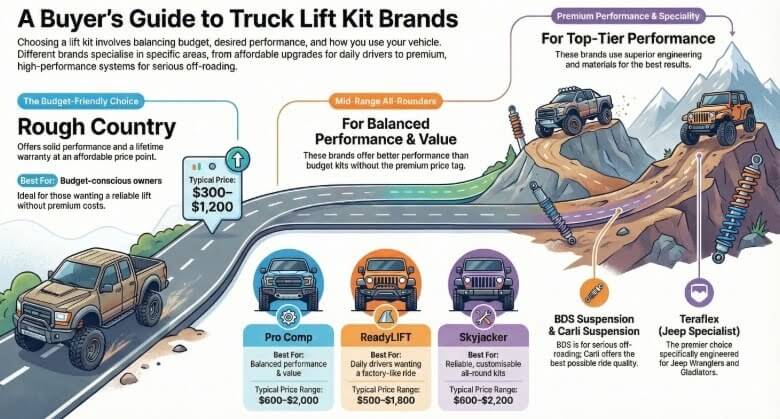
Here are the top lift kit manufacturers and what each brings to the table.
Quick Comparison: Best Truck Lift Kit Brands
Rough Country
Rough Country is the budget-friendly option that doesn’t sacrifice quality. They offer a wide range of lift heights for most truck models, use decent materials, and back their products with a lifetime warranty. Installation is straightforward, and they’re made in the USA.
Best for: Budget-conscious buyers who want solid performance without premium pricing. Expect to pay $300-$1200 for most kits.
Known for: Affordable pricing, lifetime warranty, wide product range covering most trucks and SUVs.
BDS Suspension
BDS sits in the premium category with high-quality construction and excellent performance. Their kits are compatible with many shock brands, including Bilstein upgrades. Engineering and materials are top-notch, making them a favorite among serious off-roaders.
Best for: Truck owners who want quality components and are willing to pay for better long-term performance. Price range: $800-$3000+.
Known for: Quality construction, excellent off-road performance, strong engineering, and good shock options.
Pro Comp
Pro Comp uses high-strength materials and designs its kits based on enthusiast feedback. They balance performance and affordability well, sitting between budget and premium options.
Best for: Middle-ground buyers who want better performance than budget kits without premium prices. Typically $600-$2000.
Known for: Durable materials, good performance for the price, enthusiast-oriented design.
ReadyLIFT
ReadyLIFT focuses on maintaining factory ride quality while adding lift. Their kits include high-strength control arms and torsion keys designed for excellent fitment across many truck models. Engineering emphasizes keeping the stock driving feel.
Best for: Daily drivers who want lift without sacrificing comfort. Price range: $500-$1800.
Known for: Factory-like ride quality, versatile designs, good fitment, quality control arms.
Skyjacker
Skyjacker has been around forever and offers reliable, high-performance kits with lifetime warranties. They give you flexibility with different lift heights and shock options to match your needs.
Best for: Buyers who want proven reliability and options to customize their setup. Typically $600-$2200.
Known for: Long track record, reliable performance, lifetime warranty, flexible shock options.
Carli Suspension
Carli Suspension is the premium choice focused on ride quality and performance. Their engineering delivers outstanding off-road capability while maintaining surprisingly good on-road manners. Components are extremely durable and well-designed.
Best for: Buyers who want the best ride quality and don’t mind paying for it. Expect $2000-$5000+.
Known for: Exceptional ride quality, premium engineering, top-tier materials, best-in-class performance.
Teraflex
Teraflex specializes in Jeep Wranglers and Gladiators. If you’re lifting a Jeep, they’re hard to beat for fitment, durability, and performance, specifically engineered for those platforms.
Best for: Jeep owners who want perfect fitment and Jeep-specific engineering. Price range: $800-$3500+.
Known for: Jeep-focused designs, perfect fitment, excellent durability, performance-oriented.
Value-Based Recommendations
- Best budget option: Rough Country
- Best premium: Carli Suspension or BDS
- Best for Jeeps: Teraflex
- Best adjustable/performance: Coilover systems from Pro Comp, ReadyLIFT, or Carli
Benefits of Lift Kits
Once you install a lift, here’s what you actually gain in real-world capability.
Serious Clearance Gains
Approach angle (front tire to lowest front point) typically jumps from 15-20 degrees stock to 25-30 degrees with a 4-inch lift. That’s the difference between clearing a rock ledge and smashing your bumper. Breakover angle (lowest center point between axles) goes from 18-22 degrees to 25-28 degrees – you crest ridges and drive over logs that would high-center a stock truck. Departure angle improves similarly, so your hitch and rear bumper clear obstacles that your buddies in stock trucks have to avoid.
Better Suspension Performance
Quality lift kits with upgraded shocks actually improve how your truck handles rough terrain. More suspension travel means your shocks can absorb bigger hits without bottoming out. Better articulation keeps all four tires planted on uneven ground instead of lifting off. Premium shocks tuned for your lift height control body motion better than stock, especially when you’re bombing down rough trails at speed.
Bigger Tire Options
A 2-3 inch lift opens up 33-inch tires. Jump to 4-6 inches, and you can fit 35-37-inch tires. Bigger tires give you more ground clearance, better traction off-road with larger contact patches, and more sidewall to absorb impacts. They look aggressive and perform better in mud, sand, and over rocks, where you need that extra grip and flotation.
Improved Visibility and Stance
Sitting higher gives you better sight lines in traffic and on trails. You can see over cars and SUVs ahead of you on the highway. On technical trails, you can see your line better, spot obstacles earlier, and pick better routes. Most lifted trucks also sit more level or slightly nose-high, which looks better than the factory nose-down stance and improves your view of what’s directly ahead.
How Tire Size Affects Lift Choice
Tire size and lift height are directly connected. Here’s how to think about it.
Clearance Requirements for Different Tire Sizes
As tire diameter increases, you need more space in the wheel wells to prevent rubbing during turns, suspension compression, and articulation. A 33-inch tire might fit with a 2-inch lift. 35-inch tires usually need 4-6 inches, depending on wheel offset and whether you’re willing to trim. 37-inch tires often require 6+ inches plus modifications.
Performance Impacts of Larger Tires
Bigger tires add significant rotating weight. This affects acceleration (slower), braking (takes longer), and fuel economy (worse). Your truck’s engine has to work harder to spin larger, heavier tires. These impacts are manageable on most modern trucks, but become very noticeable when going from stock to 37-inch tires without gear ratio changes.
Gear Ratio Considerations
Stock gearing is optimized for stock tire sizes. When you jump to 35+ inch tires, you’re effectively making your gears taller (lower numerical ratio), which makes acceleration sluggish and puts more stress on the transmission. Re-gearing to a lower numerical ratio (like going from 3.55 to 4.10 or 4.56) restores performance but adds a higher cost.
Avoiding Rubbing Issues
Tires can rub on fenders, control arms, or the frame during turns or suspension compression. Proper lift height for your intended tire size prevents this, but wheel offset also matters. Wheels with more backspacing push tires inward (more likely to rub suspension components), while less backspacing push tires outward (more likely to rub fenders). Getting this right requires knowing your specific truck model’s clearances.
Example Tire and Lift Combinations
Here are typical combinations for popular trucks (these vary by specific model; always verify for your truck):
- Stock to 33-inch tires: 2-3 inch lift (leveling kit or small suspension lift)
- 35-inch tires: 4-6 inch suspension lift
- 37-inch tires: 6+ inch suspension lift, potentially with trimming
- 40+ inch tires: Serious custom work, 8+ inches, extensive modifications
Real-World Balance
If you’re daily driving your truck, think about the trade-offs. Massive tires look great, but make highway driving less pleasant and tank fuel economy. For most truck owners, 33-35 inch tires with a 2-4 inch lift provide the best balance of capability, looks, and drivability.
How to Choose the Best Lift Kit for Your Needs
Here’s a decision framework to cut through the confusion.
Start With Your Primary Use Case
- Mostly street driving with occasional dirt roads? → Leveling kit or 2-3 inch suspension lift
- Weekend off-roading on moderate trails? → 3-4 inch suspension lift
- Serious off-road capability? → 4-6+ inch suspension lift with quality shocks
- Show truck or mall crawler? → Whatever height looks good to you
- Jeep Wrangler owner? → Teraflex is your best bet
Match Lift to Tire Size
- Want 33-inch tires? → 2-3 inch lift
- Want 35-inch tires? → 4-6 inch lift
- Want 37+ inch tires? → 6+ inch lift
Consider Your Budget
- Tight budget? → Rough Country
- Middle ground? → Pro Comp or ReadyLIFT
- Want the best? → Carli Suspension or BDS
Think About Installation
- DIY-friendly? → Leveling kit or simple body lift
- Professional required? → Full suspension lift, especially 6+ inches
- Want adjustability? → Coilover system (but budget accordingly)
Prioritize Ride Quality vs Extreme Clearance
- Care more about comfortable daily driving? → Stick with 2-4 inches, choose ReadyLIFT or Carli
- Need maximum clearance for technical trails? → Go taller, focus on component quality
Quick Decision Checklist
- ✓ What’s your primary use (daily driving, weekend trails, serious off-road)?
- ✓ What tire size do you want?
- ✓ What’s your realistic budget, including installation?
- ✓ DIY install or professional?
- ✓ Do you prioritize ride quality or maximum capability?
Answer these honestly, and your choice becomes obvious. Most truck owners end up happiest with a 2-4 inch suspension lift that balances capability with drivability rather than going extreme on either end.
The Bottom Line on Lift Kits
Choosing the best truck lift kit comes down to matching the right type, height, and brand to how you actually use your truck.
Top brands deliver different value propositions. Rough Country gives you the best budget option with solid quality and a lifetime warranty.
Carli and BDS provide premium performance for serious users willing to pay for it.
Pro Comp, ReadyLIFT, and Skyjacker balance performance and affordability. Teraflex dominates the Jeep market with purpose-built designs.
Tire size, budget, and intended use determine your best choice. Professional installation often delivers better long-term results than DIY, especially for complex suspension lifts, though simple leveling kits are DIY-friendly for mechanically inclined owners.
The right lift kit transforms your truck into a capable, trail-ready machine. The wrong one wastes money and rides rough. Take the time to match your choice to your actual needs rather than just going with what looks cool or what’s cheapest.
Ready to explore lifted trucks built right? Browse our Lifted Truck Inventory or learn more about Lift Installations and Upgrades.