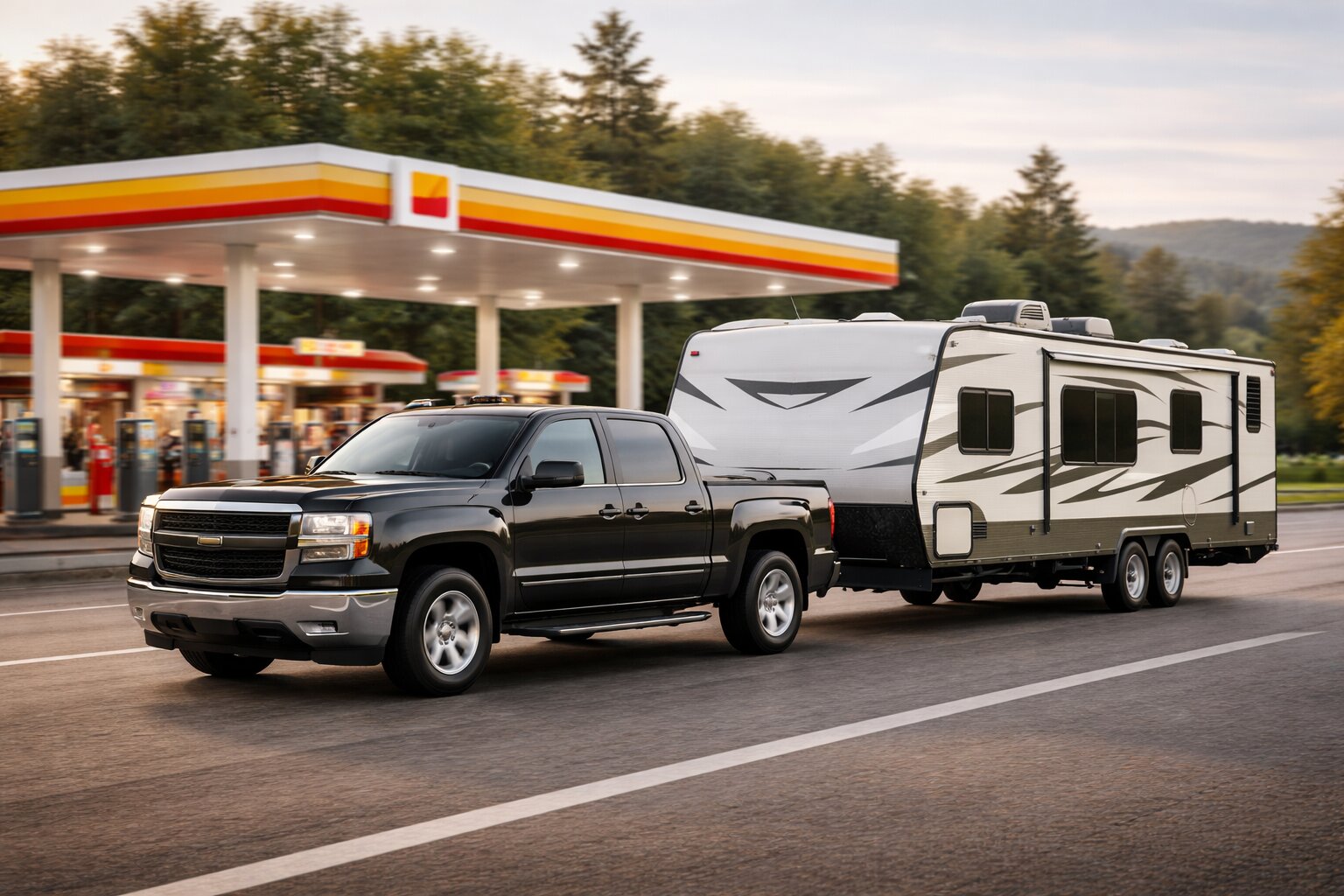
You’re shopping for a camper or boat and need to know: what is the towing capacity of a Ford F-150?
The Ford F-150 towing capacity ranges from 5,000 lbs to 13,500 lbs, depending on your engine, cab, bed, drivetrain, and towing package. That’s a massive range, and picking the wrong configuration means you’re either underpowered or overpaying for capacity you’ll never use.
We’ll break down the numbers by engine, show you how different configurations affect capacity, cover what’s changed over the years, and help you pick the right setup for what you actually need to tow.
Towing Capacity Basics: Towing vs Payload vs Ratings
Before we get into numbers, here’s what the terms actually mean.
Towing capacity: How much weight you can pull behind the truck (trailer, boat, camper).
Payload capacity: How much weight you can carry in the truck (people, cargo, bed load).
GVWR (Gross Vehicle Weight Rating): Maximum weight of your loaded truck, including everything.
GCWR (Gross Combined Weight Rating): Maximum combined weight of truck and trailer together.
Tongue weight: The Downward force the trailer puts on your hitch should be about 10% of the total trailer weight.
If your trailer weighs 7,000 lbs, you need an F-150 rated to tow at least that much. But you also need payload capacity to handle the tongue weight (about 700 lbs) plus passengers and gear. Exceed either limit, and you’re creating a safety problem.
Real-world safe towing means staying within all these limits at the same time, not just hitting the max towing number.
How Much Can a Ford F-150 Tow?
What is the max towing capacity of a Ford F-150? Let’s get to the headline number. A properly equipped 2025 Ford F-150 can tow up to 13,500 lbs. That’s with the 3.5L EcoBoost V6, the right cab and bed combination, 4×2 drivetrain, and the Tow/Haul Package with Max Tow Axle upgrade.
Recent model years (2021-2023) actually hit 14,000 lbs with similar setups. Ford dialed it back slightly for 2024-2025, but 13,500 lbs is still plenty for most recreational and work trailers.
On the low end, base configurations with the smaller engines and no towing packages start around 5,000-7,400 lbs. That’s still enough for utility trailers, small boats, and pop-up campers, but you’re not hauling a 30-foot fifth wheel with that setup.
The point is, towing capacity varies widely across the F-150 lineup. The specific number for your truck depends on:
- Engine choice
- Trim level and packages
- Cab style (Regular Cab, SuperCab, SuperCrew)
- Bed length (5.5-ft, 6.5-ft, or 8-ft)
- Drivetrain (4×2 vs 4×4)
Always check the door jamb sticker on your specific truck before towing at or near max capacity. That sticker shows the exact ratings for your particular build, and those numbers are what actually matter when you hook up a trailer.
Ford F-150 Engine Options & Towing Capacity (Current Models)
Engine choice is the biggest factor in what an F-150 can tow. Here’s the 2024-2025 lineup.
The 3.5L EcoBoost (standard, non-Raptor) delivers the highest towing at 13,500 lbs when properly equipped. It’s the engine you want for heavy trailers in the 10,000-13,500 lb range.
The 5.0L V8 is for people who just want a V8. Towing capacity hits 12,900 lbs with the right setup, and it offers the highest payload at 2,225 lbs.
The PowerBoost Hybrid gives you serious torque (570 lb-ft) and better fuel economy, but max towing drops to 11,200 lbs. You also get the onboard generator for job sites or camping.
Raptor models aren’t built for max towing. They’re tuned for off-road performance, which is why towing capacity sits around 8,200-8,700 lbs despite the powerful engines.
Towing Capacity by Trim, Cab, Bed & Drivetrain
Same engine, different towing numbers. Cab style, bed length, and drivetrain all change the truck’s weight and balance, which affects towing capacity.
Trim Level Impact:
- XL / XLT / STX: Work-truck trims with less weight, can hit 13,500 lbs max with 3.5L EcoBoost and the right setup
- Lariat / King Ranch / Platinum: Luxury features add weight, slightly lower payload, but still strong towing (12,000-13,000 lbs range)
- Tremor: Off-road focused, expect 9,000-10,000 lbs depending on engine
- Raptor / Raptor R: Built for desert running, not towing (8,200-8,700 lbs max)
Cab and Bed Configuration:
- Regular Cab: Lightest, can achieve the highest towing numbers
- SuperCab: Extended cab, good middle ground
- SuperCrew: Full four-door, most popular, slightly heavier, but the difference is usually only a few hundred pounds
Bed length (5.5 ft, 6.5 ft, 8 ft) affects weight distribution. Max towing setups usually pair shorter beds with stronger axles.
Drivetrain:
- 4×2 (Two-Wheel Drive): Lighter, better fuel economy, slightly higher towing capacity
- 4×4 (Four-Wheel Drive): Adds 100-300 lbs, reduces max towing slightly, but offers better traction in weather and off-pavement
To hit 13,500 lbs max, you need:
- 3.5L EcoBoost V6
- 3.73 or 3.55 rear axle ratio
- Tow/Haul Package with Max Tow Axle upgrade
- 4×2 drivetrain (or accept slightly lower on 4×4)
Always verify the exact capacity from your truck’s door jamb sticker or VIN.
Towing Capacity by Model Year (Shopping New vs Used)
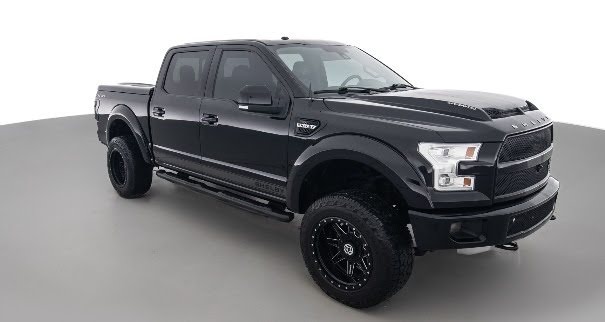
Towing capacity has climbed steadily as Ford improved engines and chassis design. Here’s what to expect if you’re shopping used.
F-150 Lightning (2022-2025):
The Lightning is capable, but range drops dramatically when towing. Plan charging stops accordingly. Gas-powered F-150s also see reduced fuel economy when towing – learn how much towing lowers your MPG to budget for fuel costs.
Shopping Used: Even 2015-2017 trucks with the 3.5L EcoBoost can pull 12,000+ lbs, which handles most travel trailers and boats. Used trucks with added accessories (toolboxes, bed racks) have less available payload.
How to Choose the Right F-150 for Your Towing Needs
Here’s how to match a truck to what you actually tow.
Step 1: Know Your Trailer’s Loaded Weight
Find the GVWR (Gross Vehicle Weight Rating) of your trailer. This is the maximum weight, including the trailer itself, plus cargo, water, propane, and gear. Don’t trust “dry weight” numbers from dealers. Real-world weight is often 1,000-2,000 lbs heavier.
Step 2: Calculate Total Payload Needed
Your truck’s payload must cover:
- Tongue weight (10% of trailer weight)
- Passengers (estimate 150 lbs each)
- Cargo in the truck bed or cab
- Any accessories (toolboxes, racks)
Example: 8,000 lb trailer = 800 lbs tongue weight + 3 passengers (450 lbs) + 200 lbs gear = 1,450 lbs payload needed.
Step 3: Match Truck to Load
Step 4: Build in a Safety Margin
Don’t regularly tow at max capacity. If you’re pulling 10,000 lbs every weekend, get a truck rated for 12,000-13,000 lbs. This reduces stress on the engine, transmission, and brakes.
If you’re consistently over 10,000 lbs, consider the F-250 or F-350 Super Duty. Those trucks are built for sustained heavy towing.
Safe Towing Tips & Common Mistakes to Avoid
You’ve got the right truck. Now make sure you’re towing safely.
Use the Right Hitch: Weight-distributing hitch required for trailers over 5,000 lbs. Factory F-150 hitch rated at 13,500 lbs with Max Tow Axle upgrade. Hitch ball and mount must be rated for your trailer weight.
Check Brakes and Lights: Trailers over 2,000 lbs need their own brakes. F-150’s Integrated Trailer Brake Controller adjusts sensitivity from the dash. Test lights and brakes before every trip.
Distribute Load Properly: 60% of cargo weight in the front half of the trailer, 40% in the rear. Load balanced side-to-side. Tongue weight should be 10-15% of total trailer weight.
Tire Pressure: Check both truck and trailer tires before every trip. The door jamb sticker shows the recommended towing pressure. Underinflated tires generate heat and can blow out. If you’re running a lifted F-150, proper tire pressure becomes even more important when towing heavy loads.
Drive Differently:
- Double your normal stopping distance
- Use lower gears on steep hills
- Turn wide to avoid clipping curbs with the trailer
- Tow/Haul mode handles downshifting automatically
Common Mistakes:
- Assuming any F-150 can tow 13,500 lbs (only specific configurations hit that max)
- Ignoring payload limits (tongue weight + passengers + cargo can’t exceed payload)
- Towing at max capacity with no margin (aim for 80% of max for regular use)
- Skipping the weight-distributing hitch on trailers over 5,000 lbs
- Using cruise control in rain or snow while towing
When in doubt, ask a service advisor before you hit the road.
What’s the Verdict on F-150 Towing Capacity?
The F-150 tows between 5,000 and 13,500 lbs, depending on engine, trim, cab, bed, and drivetrain. The 3.5L EcoBoost delivers max capacity at 13,500 lbs with the right setup. Used trucks from 2015 and newer still offer strong numbers, with 2021-2023 models hitting peak capacity at 14,000 lbs.
Pick your truck based on what you actually tow, not just the brochure max. Build in a safety margin. Use the right hitch, check your payload limits, and drive conservatively.
Ready to find the right F-150?
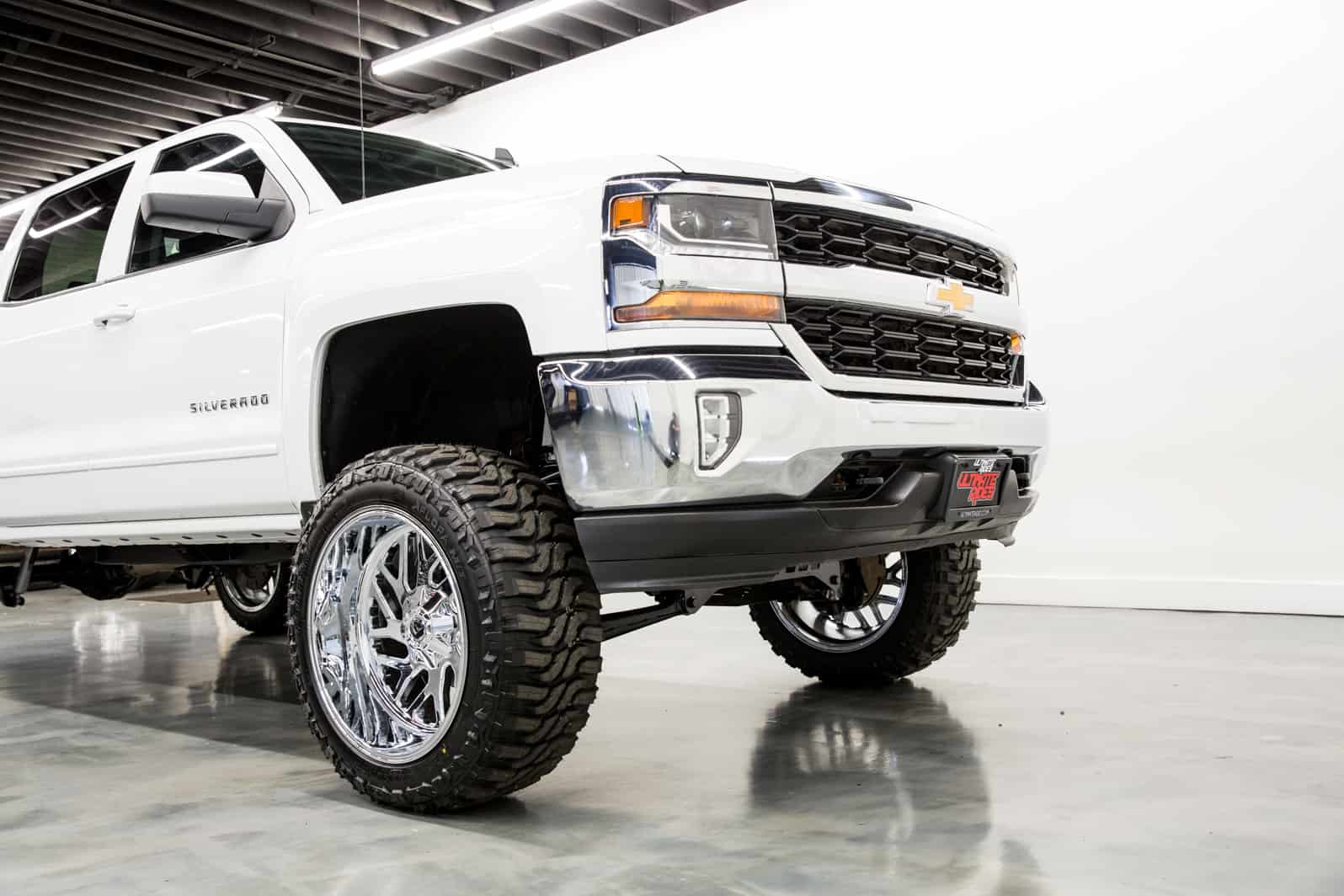
Browse our collection of Professionally Lifted F-150s.