You’re staring at your 4WD selector showing 2H, 4H, and 4L, and the road ahead is getting sketchy. Which one do you actually use?
Most 4WD trucks and SUVs give you three main drive modes: 2Hi for everyday driving, 4Hi for slippery conditions at normal speeds, and 4Lo for slow-speed maximum traction. Pick the wrong one, and you’re either wasting fuel, risking damage to your drivetrain, or not getting the traction you need.
We’ll explain what each mode does, when to use 4-wheel drive high vs low, how to shift between them safely, and cover real-world scenarios like snow, mud, towing, and steep hills.
4WD & Drive Modes 101: 2Hi, 4Hi & 4Lo Explained
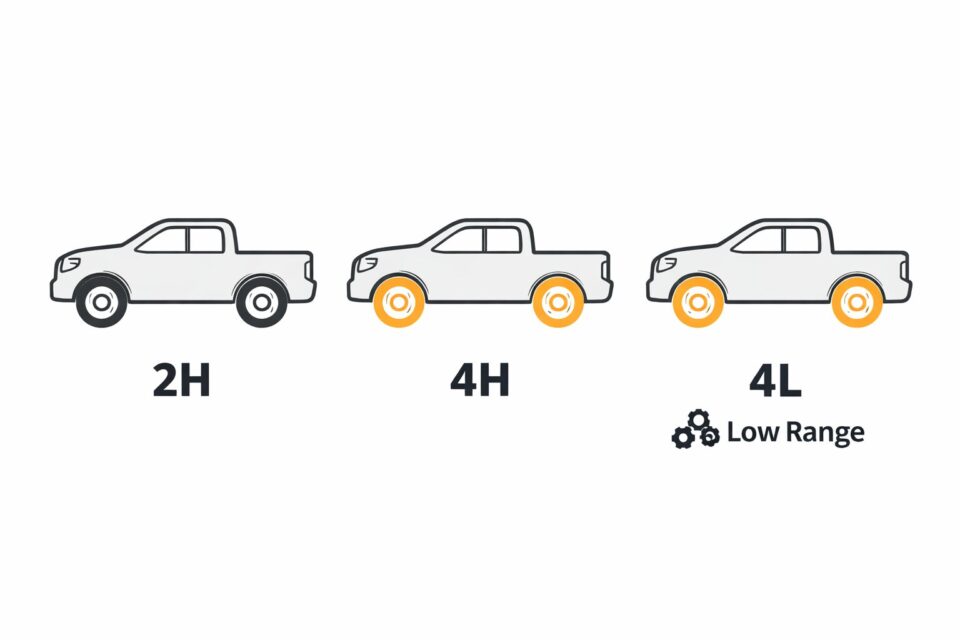
Here’s what these modes actually do and why they exist.
➔ 4WD vs AWD (quick context): Four-wheel drive (4WD) typically gives you manual control over when power goes to all four wheels. All-wheel drive (AWD) usually handles this automatically. Most trucks and serious off-road SUVs use 4WD with selectable modes.
➔ 2Hi (2H, Two-Wheel Drive High Range): Power goes to two wheels (usually the rear on trucks). Normal gearing for everyday speeds. Best for dry pavement, good fuel economy, and less wear on front drivetrain components.
➔ 4Hi (4H, Four-Wheel Drive High Range): Power goes to all four wheels at normal road speeds. Same gear ratio as 2Hi, but with power split between front and rear axles. More traction on slippery surfaces like snow, ice, gravel, or wet roads.
➔ 4Lo (4L, Four-Wheel Drive Low Range): Power goes to all four wheels through a low-range gear set. Very slow speeds, very high torque. Built for tough terrain like deep mud, steep rocky climbs, or getting unstuck.
Some vehicles also have an Auto 4WD mode that automatically engages the front wheels when the system detects rear wheel slip. This works well for most drivers who don’t want to think about it, but manual modes give you more direct control.
These modes are selected via a transfer case, the mechanical component that splits power between the front and rear axles and changes gear ratios. You don’t need to understand the mechanics deeply, just know that’s what makes the different modes possible.
When to Use 2Hi (2H): Your Everyday Driving Mode
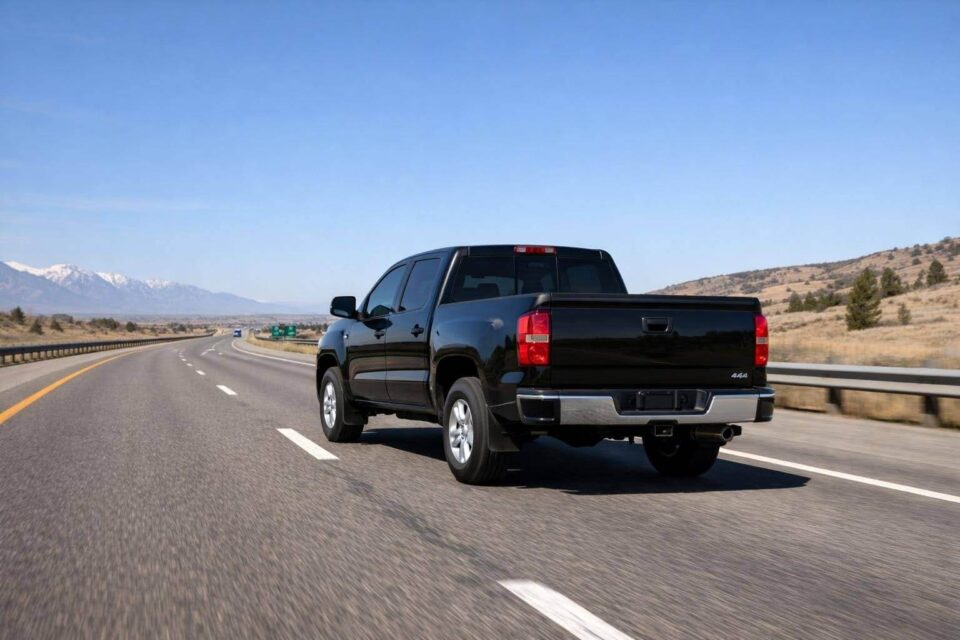
2Hi is your default. Here’s when to use it.
Use 2Hi for:
- Dry, paved roads (highways, city streets, parking lots)
- Normal commuting and road trips in good weather
- Light rain where traction is still solid
- Towing on dry, flat roads
Why 2Hi matters:
- Best fuel economy (front wheels aren’t being driven, less mechanical drag)
- Less wear on front drivetrain components (longer component life, lower maintenance)
- Smoothest, quietest ride on pavement
A lot of people think they should “use 4WD all the time” because they own a 4WD vehicle. That’s wrong. Running 4Hi on dry pavement causes tire scrubbing (all four tires fighting each other in turns) and drivetrain binding. You’ll wear out tires faster, stress the transfer case, and waste fuel for zero benefit.
Use 2Hi when: commuting to work, highway cruising in good weather, running errands around town, any time the road is dry, and you have good traction.
When to Use 4Hi (4H / 4 High): Slippery Roads at Normal Speeds
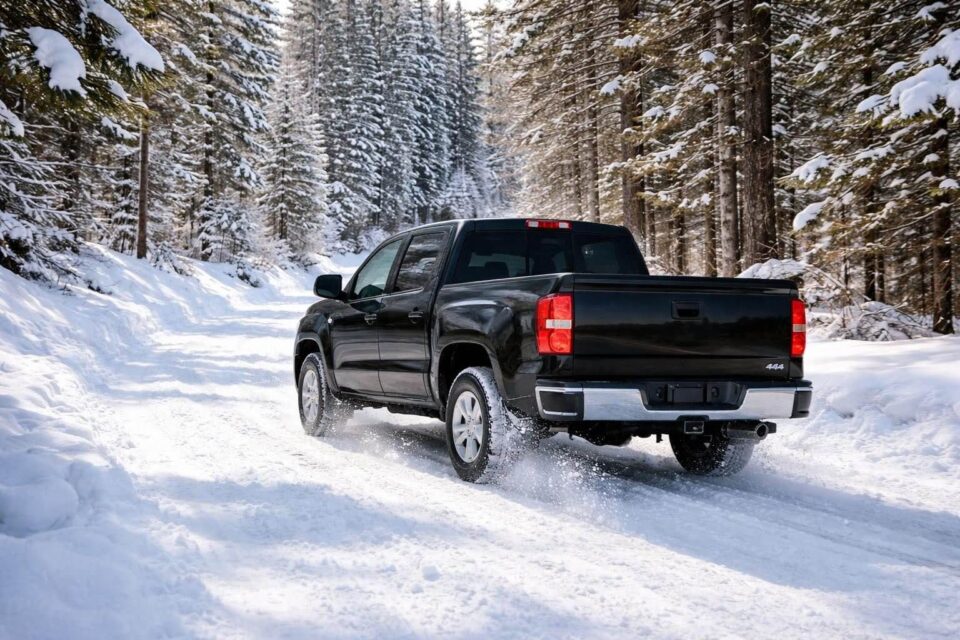
4Hi is your go-to mode for higher-speed slippery conditions. The difference between 4h and 4l comes down to speed and gearing. 4Hi uses the same gear ratio as 2Hi, so you can drive at normal highway speeds.
Use 4Hi for:
- Snow-covered but plowed highways
- Icy or slushy roads where you need extra traction
- Gravel roads, dirt roads, light mud
- Wet pavement where you’re losing traction
- Rainy conditions on highways (if you’re struggling for grip)
Speed range: Up to about 50-55 mph, depending on manufacturer recommendations. Always check your owner’s manual for your specific vehicle’s limits.
What 4Hi does: Splits power between front and rear axles, giving you better traction and stability. If the rear wheels start to slip, the front wheels are already pulling, which helps you maintain control.
What 4Hi does NOT do: It doesn’t shorten your stopping distance on ice. Braking is still limited by tire grip, and four-wheel drive doesn’t help you stop faster. You still need to drive slowly and leave extra space.
When to Use 4Lo (4L / 4 Low): Maximum Torque, Minimum Speed
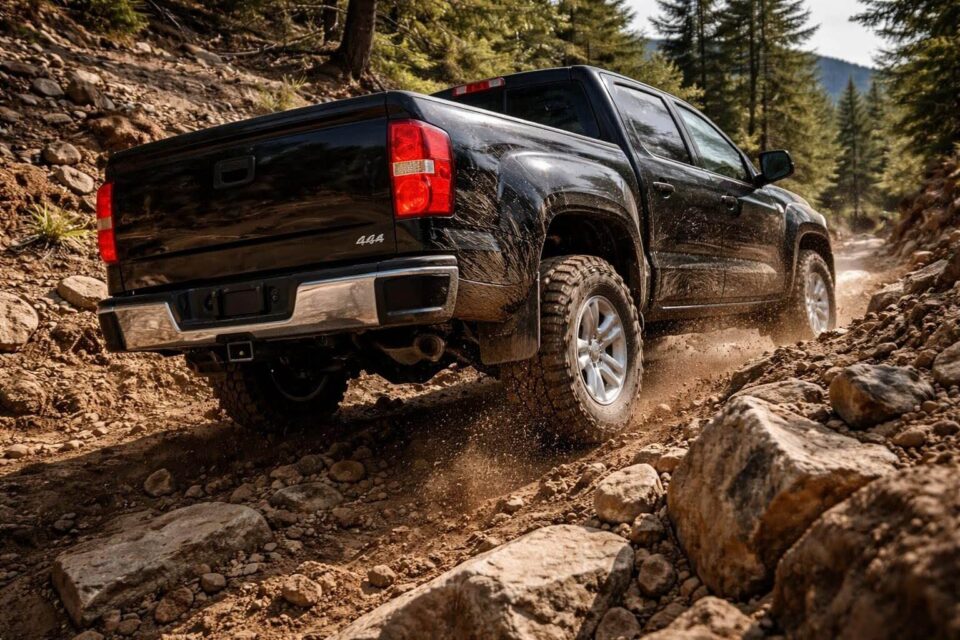
4Lo is a specialty mode. It’s not for normal driving. Understanding 4 low vs 4 high means knowing when you need maximum pulling power at very low speeds.
Use 4Lo for:
- Deep mud where you’re at risk of getting stuck
- Deep snow (unplowed, drifted, or where you’re plowing through with the truck)
- Soft sand (beaches, dunes) where you need momentum and control
- Steep, loose climbs or descents (rocky trails, rutted hills, off-road terrain)
- Slow rock crawling over obstacles
- Getting unstuck (self-recovery or pulling another vehicle out)
- Towing or pulling a heavy load up a steep, slippery ramp at very low speed
Speed range: Typically below 15-20 mph. Exact limits vary by vehicle. Never use 4Lo at highway speeds.
What 4Lo does: Reduces the gear ratio, which multiplies engine torque to the wheels. You get much more pulling power, but at much lower speeds. Think of it like using first gear on a steep hill, but with even more torque multiplication and power to all four wheels.
When 4 wheel drive high vs low matters most: If you’re moving faster than walking speed and need traction, use 4Hi. If you’re crawling slowly and need maximum torque, use 4Lo.
Critical rules:
- Only engage 4Lo when stopped (or rolling very slowly) and in Neutral. Follow your owner’s manual procedure.
- Never attempt to shift into 4Lo at highway speeds. You’ll damage the transfer case.
- Switch back to 2Hi or 4Hi as soon as conditions improve. Driving in 4Lo when you don’t need it wastes fuel and puts unnecessary strain on the drivetrain.
2Hi vs 4Hi vs 4Lo: Side-by-Side Comparison
Here’s 4h vs 4l (and 2Hi) compared side by side.
Quick answer based on situation:
- Dry highway, good weather? Use 2Hi.
- Snowy highway, still moving 40+ mph? Use 4Hi.
- Stuck in deep mud, need to crawl out slowly? Use 4Lo.
- Towing a boat up an icy ramp at 5 mph? Use 4Lo.
- Gravel road at 30 mph? Use 4Hi.
Match the mode to both your speed and the amount of traction you need. If you’re going fast, you’re limited to 2Hi or 4Hi. If you’re going slow and need serious pulling power, that’s when to use 4-wheel drive low.
How to Shift Between Modes Safely
Shifting between modes wrong can damage your transfer case. Here’s how to do it right.
Always consult your owner’s manual first. Procedures vary by vehicle (electronic dial, push-button, or mechanical lever), but these are general guidelines.
2Hi to 4Hi (and back)
Most modern 4WD systems let you shift between 2Hi and 4Hi “on the fly” while moving.
Procedure:
- Drive at low to moderate speed (usually under 50-55 mph, check your manual)
- Shift into 4Hi using your selector (dial, button, or lever)
- Wait for the indicator light on the dash to confirm engagement
- If it doesn’t engage or the light blinks, slow down slightly and try again
Going back from 4Hi to 2Hi: Same process. Select 2Hi while driving at a moderate speed once road conditions improve.
4Hi to 4Lo (and back)
Shifting into or out of 4Lo requires you to stop (or be rolling very slowly).
Procedure:
- Come to a complete stop (or slow crawl, depending on vehicle)
- Shift transmission into Neutral (N)
- Select 4Lo using your transfer case selector
- Wait for the confirmation light on dash
- Shift transmission back into Drive or desired gear
Going from 4Lo back to 4Hi:
- Stop (or slow crawl)
- Transmission into Neutral
- Select 4Hi
- Wait for confirmation
- Shift transmission back into Drive
Important tips:
- Don’t force the lever or dial. If it won’t engage, you may need to roll forward or backward slightly to let the gears align.
- Watch for the indicator light on your dash. Solid light means engaged. A flashing light means it’s trying to engage or there’s a problem.
- If shifting feels harsh or grinds, stop and re-check your procedure.
Modern electronic systems vs older mechanical levers: Electronic selectors (dials and buttons) are usually easier and more forgiving. Older mechanical lever systems require more precise technique. Either way, follow the manufacturer’s instructions.
Common Mistakes People Make with 4WD (and How to Avoid Them)
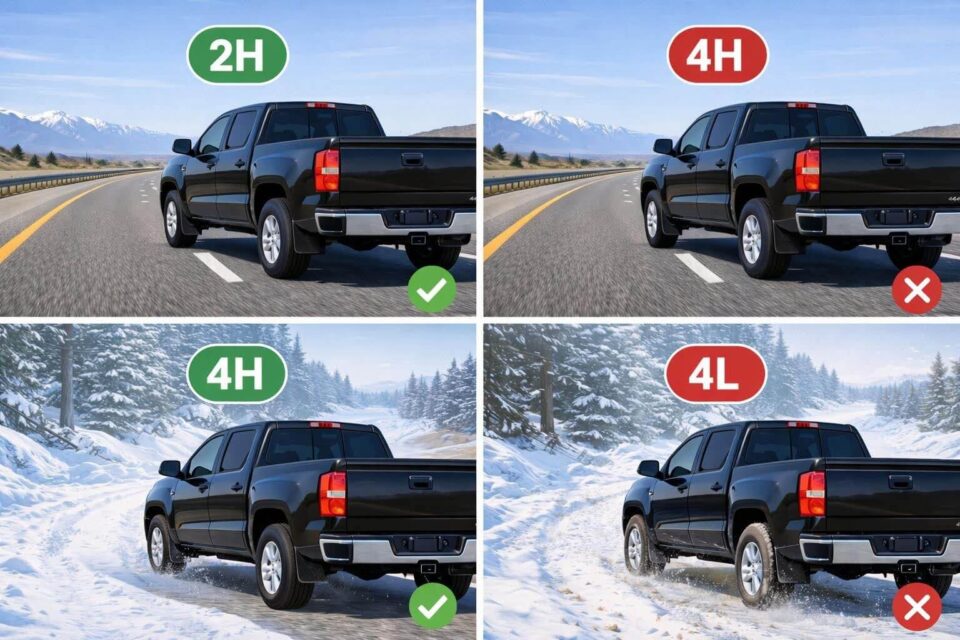
Here’s what not to do.
Mistake 1: Using 4WD on dry pavement for no reason
✖ Why it’s bad: Causes tire scrubbing, drivetrain binding, extra wear, and worse fuel economy. You’re stressing components for zero benefit.
✔ What to do instead: Use 2Hi on dry roads. Only engage 4Hi when you actually need traction.
Mistake 2: Driving too fast in 4Lo
✖ Why it’s bad: 4Lo is geared for low speeds and high torque. Pushing it to 30-40 mph risks overheating the transfer case, damaging gears, and losing control.
✔ What to do instead: Keep it slow in 4Lo. If you need to go faster than 20 mph, shift to 4Hi or 2Hi.
Mistake 3: Leaving 4Hi engaged long after conditions improve
✖ Why it’s bad: Wastes fuel, causes unnecessary wear, and if you end up on dry pavement for extended stretches, you’re back to mistake #1.
✔ What to do instead: Shift back to 2Hi as soon as the road clears up. It takes 5 seconds and saves your drivetrain.
Mistake 4: Using 4Lo to “go faster” up a hill
✖ Why it’s bad: 4Lo isn’t about speed; it’s about torque and control. Trying to use it for speed just means you’re in the wrong mode.
✔ What to do instead: Use 4Hi for slippery hills at normal speeds. Use 4Lo only for very steep, slow climbs where you need maximum traction.
Mistake 5: Forgetting to check your owner’s manual
✖ Why it’s bad: Every vehicle is slightly different. Speed limits, engagement procedures, and recommendations vary.
✔ What to do instead: Read your manual. Keep it in the glove box. Know your specific system.
Final reminder: 4WD improves traction. It does not make you invincible. You still need to drive according to conditions, leave extra space for braking, and use common sense.
Real-World Scenarios: Snow, Mud, Sand, Towing & Steep Hills
Let’s translate theory into practice. Here’s when to use 4-wheel drive in common situations.
Snow & Ice
Plowed but snowy highway (30-50 mph): Use 4Hi. You’re moving at normal speeds but need extra traction. 4Hi keeps all four wheels pulling, which helps you maintain momentum and control.
Deep snow in a driveway or unplowed road (5-15 mph): Use 4Lo if you’re plowing through deep drifts or moving very slowly. Use 4Hi if you can maintain some speed and the snow isn’t deep enough to bog you down.
Icy parking lot: Use 4Hi for better control, but remember it won’t help you stop faster. Drive slowly.
Reminder: Four-wheel drive helps you go and turn. It does not help you stop. Braking distances on ice are the same in 2Hi, 4Hi, or 4Lo. Drive accordingly.
Mud & Sand
Light mud or firm sand (10-30 mph): Use 4Hi. You’ve got decent traction and can maintain moderate speed.
Deep mud or soft sand where you’re at risk of getting stuck: Use 4Lo. You need maximum torque to keep momentum without spinning the tires. Steady throttle, controlled speed. If you stop, you’re stuck.
Tip for sand: Air down your tires slightly (consult proper tire pressure guidelines for your vehicle and tire type) to increase the contact patch. This helps in soft sand. Don’t forget to air back up before hitting pavement.
Rocky Trails & Steep Hills
Slow rock crawling, technical obstacles (1-5 mph): Use 4Lo. You need precise throttle control and maximum torque to navigate rocks, ruts, and steep sections without losing traction or control.
Long, rough dirt road to a campsite (15-30 mph): Use 4Hi. The road is bumpy and loose, but you’re moving at a decent pace. 4Hi gives you stability without the sluggishness of 4Lo.
Steep paved hill in snow: Use 4Hi. You’re on pavement (even if it’s slippery), moving at moderate speed. 4Hi is the right call.
Towing & Heavy Loads
Towing a boat up a slippery ramp (walking speed): Use 4Lo. You’re moving very slowly, you need maximum pulling power, and traction is questionable. This is exactly what 4Lo is built for.
Highway towing in bad weather (30-60 mph): Use 2Hi or 4Hi, depending on how bad the traction is. If the road is just wet but you’re not slipping, 2Hi is fine. If you’re on snowy or icy highways, shift to 4Hi for better stability. Keep in mind that towing significantly reduces fuel economy, especially in 4WD modes.
Check your owner’s manual: Some manufacturers have specific guidance on towing in 4WD modes. Follow their recommendations.
When You’re Unsure
If you’re off-road and not sure whether to use 4Hi or 4Lo, start with 4Hi. If you’re still struggling for traction and can safely stop, shift into 4Lo. Better to start with less and shift up than to start in 4Lo and realize you didn’t need it.
What’s the Final Word on 2Hi, 4Hi, and 4Lo?
The 4-wheel-drive high vs low decision comes down to speed and conditions. If you’re moving at normal road speeds and need traction, use 4Hi. If you’re crawling slowly and need serious torque, use 4Lo.
Always follow your manufacturer’s instructions for shifting between modes. Practice in a safe area (empty parking lot, quiet dirt road) before you need to use it in an emergency.
4WD gives you more traction and control, but it’s not magic. Drive smart, know your limits, and switch back to 2Hi when conditions improve.
Ready for a Lifted Truck That’s Done Right?
If you’re serious about 4WD performance, shortcuts don’t cut it. We deal exclusively in lifted trucks built for real use, not just looks. Whether you’re buying a lifted truck or upgrading your current one, our inventory and lift shop are built around doing it the right way.